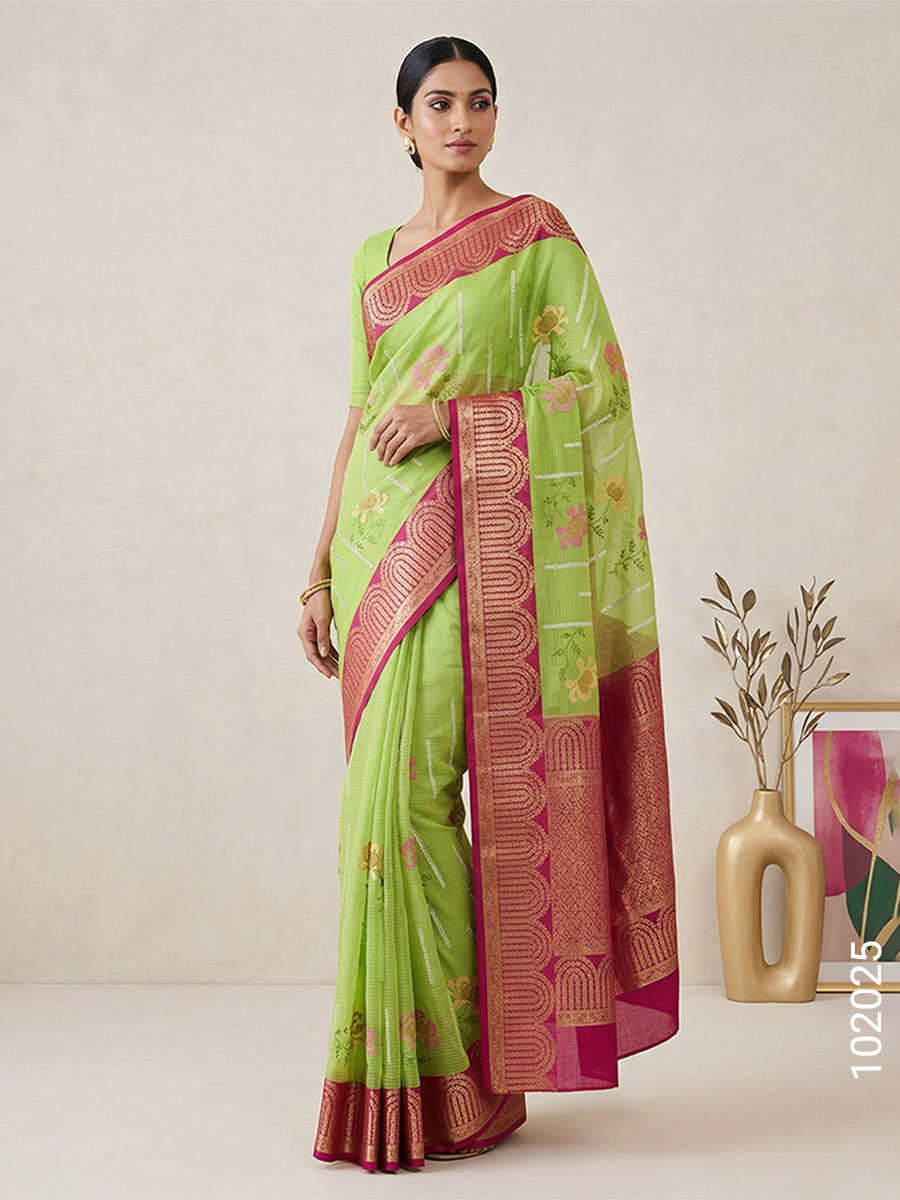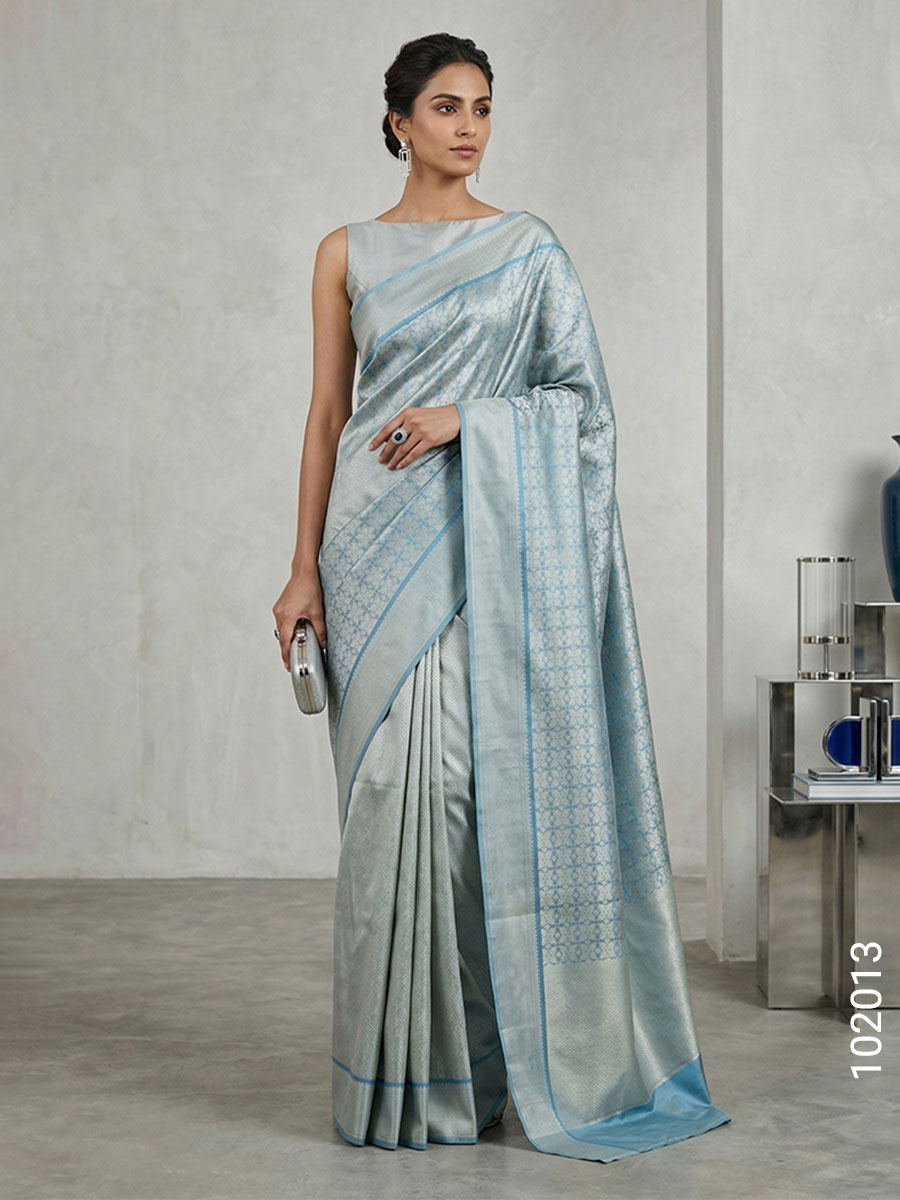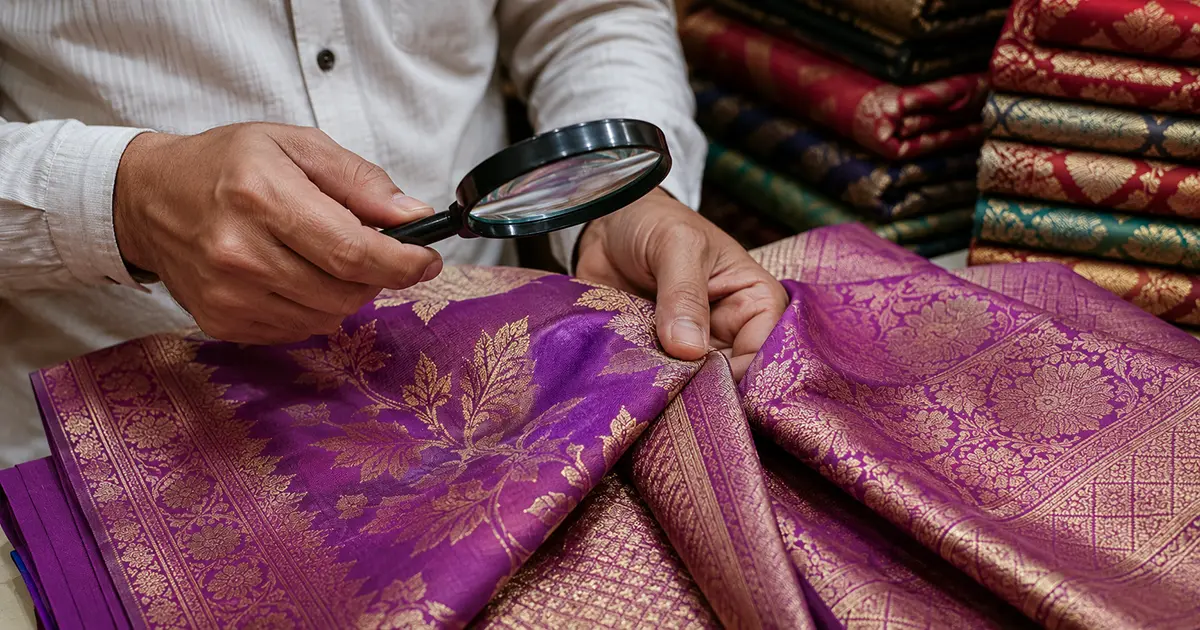
Learn how boutiques, wholesalers, and resellers can identify pure Banarasi sarees by understanding fabric quality, weaving techniques, zari work, craftsmanship, and supplier selection.
How to Identify Pure Banarasi Sarees: A Practical Guide for Boutiques and Resellers
Banarasi sarees are among the most respected and sought-after sarees in India.
Known for their rich weaving tradition, elegant craftsmanship, and timeless appeal, Banarasi sarees continue to have strong demand across wedding, festive, and premium fashion markets.
However, many boutiques, resellers, and wholesale buyers often face one common challenge.
How do you identify a pure Banarasi saree?
Understanding a few important details can help buyers make better sourcing decisions and build stronger customer trust.
Understand the Fabric First
The fabric is one of the first indicators of a quality Banarasi saree.
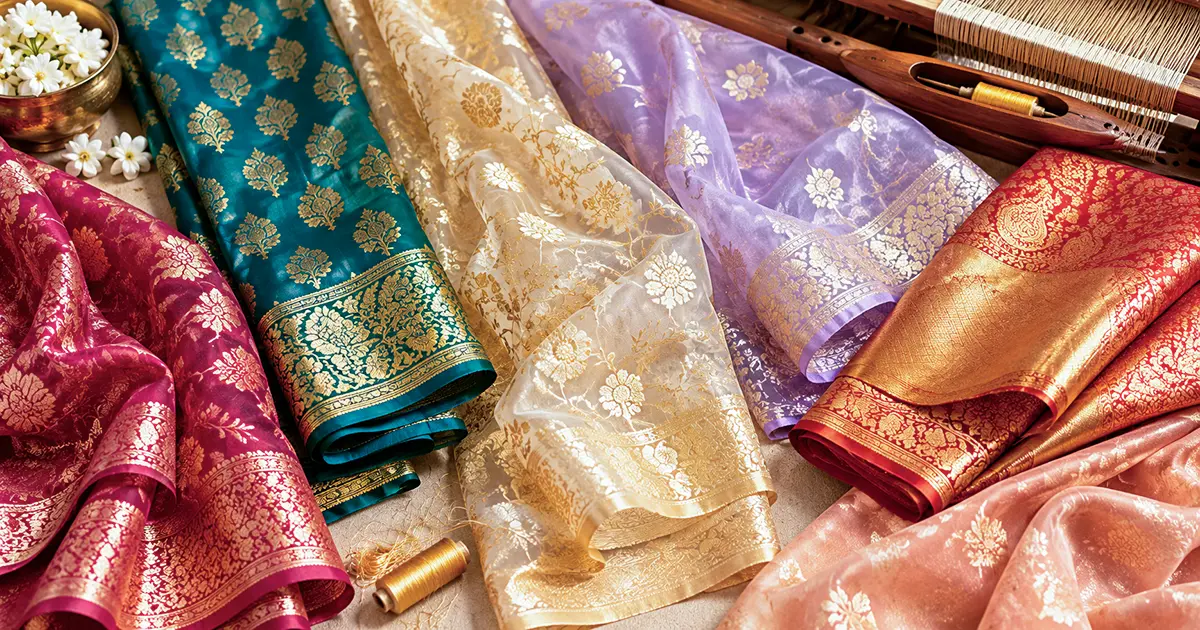
Popular Banarasi fabrics include:
- Katan Silk
- Organza Silk
- Tissue Silk
- Mashru Silk
- Georgette Silk
Pure Banarasi sarees usually have a refined texture and a premium feel.
The fabric should feel balanced and well-finished rather than rough or inconsistent.
Understanding fabric categories helps boutiques explain products more confidently to customers.
Observe the Weaving Quality
Banarasi sarees are known for detailed weaving work.
Carefully examine:
- Borders
- Pallu design
- Motif placement
- Design consistency
- Overall weaving finish
Good Banarasi weaving usually looks clean, balanced, and well-crafted.
Uneven weaving may indicate lower-quality production standards.
Pay Attention to the Zari Work
Zari is one of the most recognizable features of a Banarasi saree.
Well-executed zari work usually appears:
- Rich in appearance
- Evenly woven
- Cleanly finished
- Consistent across the design
The quality of zari work often reflects the overall craftsmanship of the saree.
This is why experienced buyers always inspect zari details carefully.
Check the Reverse Side of the Saree
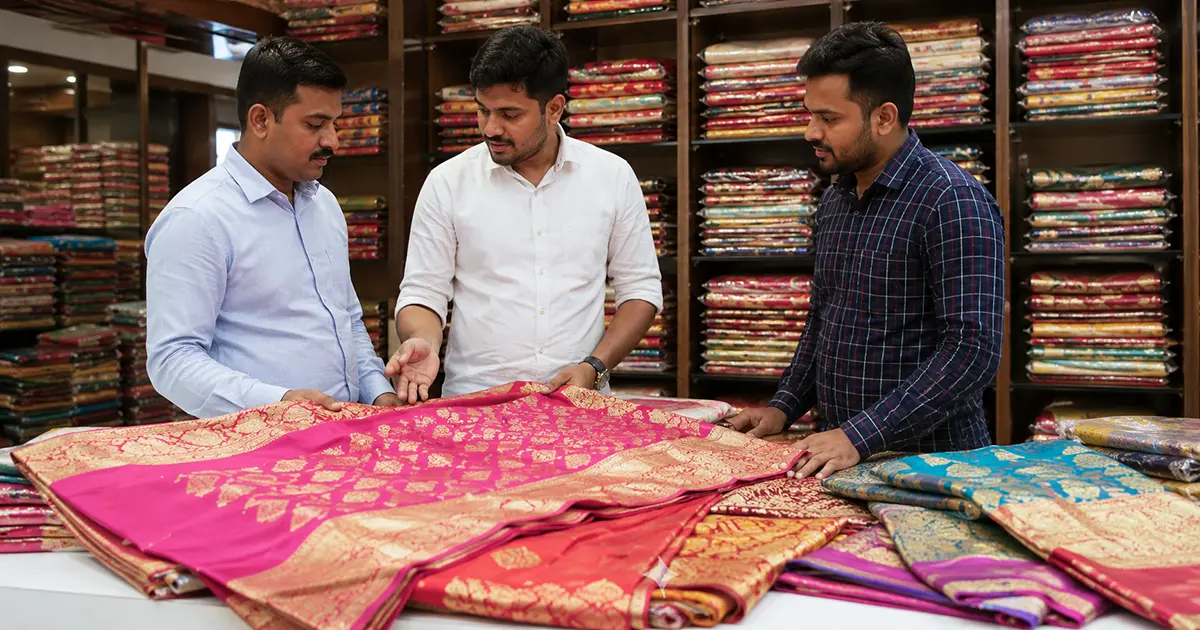
Many experienced buyers look at the reverse side of the saree during inspection.
The reverse side can provide useful insights into:
- Weaving discipline
- Thread management
- Design execution
- Finishing quality
A well-crafted Banarasi saree often shows better overall workmanship throughout the fabric.
Learn Common Banarasi Design Styles
Traditional Banarasi sarees often feature distinctive design elements.
Popular styles include:
- Jaal patterns
- Butidar designs
- Floral motifs
- Paisley motifs
- Traditional Mughal-inspired designs
Understanding these styles helps boutiques and resellers explain collections more effectively to customers.
Understand Different Customer Segments
Not every customer looks for the same type of Banarasi saree.
Some customers prefer:
- Heavy wedding collections
- Lightweight festive wear
- Premium designer styles
- Daily premium wear
Knowing the intended customer segment helps buyers select the right products and fabrics.
Work with Reliable Suppliers
Even the best product knowledge becomes less useful without reliable sourcing support.
A trusted supplier should provide:
- Consistent quality
- Clear product information
- Updated collections
- Professional communication
- Long-term business support
Reliable sourcing relationships help reduce quality-related issues and improve customer satisfaction.
Why Product Knowledge Matters for Boutiques and Resellers
Today's customers often ask detailed questions before making a purchase.
They want to understand:
- Fabric type
- Weaving quality
- Product uniqueness
- Value for money
Boutiques and resellers who understand Banarasi sarees well can:
- Build customer confidence
- Improve product presentation
- Position products more effectively
- Increase repeat business
Knowledge helps create trust.
Why Banarasi Sarees Continue to Hold Premium Value
Banarasi sarees have remained relevant for generations because they combine tradition, craftsmanship, and elegance.
Their continued popularity comes from:
- Rich weaving heritage
- Premium appearance
- Wedding demand
- Festival demand
- Long-lasting cultural value
For boutiques, wholesalers, and resellers, Banarasi sarees remain one of the strongest categories in the ethnic wear market.